
Revolutionize Healthcare: Artificial Intelligence in Healthcare
Artificial intelligence in healthcare is changing how we spot disease and manage treatment.
By blending smart tools with clinical data, we can speed up diagnosis and sharpen accuracy. This helps providers make better choices and saves time for patients and staff.
We see systems that learn from vast health records to spot patterns humans might miss. That leads to clearer care plans and improved outcomes for many people.
As digital health grows, innovation also cuts costs and widens access. You and your care team can use these tools to simplify tasks and focus on what matters most: patient well‑being.
The Evolution of Artificial Intelligence in Healthcare
The last ten years show a clear shift: more studies now focus on learning systems that process clinical information.
| Item Name | Description | Calories | Price |
|---|---|---|---|
| 2014 Publications | Early studies on medical machine methods | 158 | 3.54% |
| 2024 Publications | Expanded research across care settings | 731 | 16.33% |
| Trend | Growth in data-driven studies | +462% | Rising use |
Research growth is striking: the field rose from 158 articles in 2014 to 731 by 2024, showing wider academic focus on data and machine learning.
That surge has real effects for health teams. Hospitals and clinics now adopt tools that sort large information sets. This leads to more precise treatment plans and better patient care.
- More publications mean faster development of new technologies.
- Clinicians gain clearer, data-backed insight for decision making.
- We should keep tracking how these systems change practice over time.
Defining the Role of AI in Modern Medicine
Modern clinical workflows now use smart models to turn raw health records into clear, actionable signals. These systems process large sets of data to support faster, more accurate diagnosis and treatment choices.
Let’s break down what these tools can do and how they shift decision making for providers and patients.
Understanding AI Capabilities
Models apply machine learning to health data to flag risky trends and suggest likely diagnoses. They speed up routine tasks and free clinicians to focus on complex care.
The Shift in Medical Decision Making
Tools offer evidence summaries and probability scores that guide treatment plans. This leads to more consistent care and better outcomes for patients.
- Data-driven alerts catch problems earlier.
- Predictive models help tailor treatment timing.
- Accessible tools extend reach to more people and sites.
| Item Name | Description | Calories | Price |
|---|---|---|---|
| Diagnostic Model | Processes imaging and labs to suggest likely conditions | 0 | $12,000 |
| Predictive Tool | Forecasts patient risk for readmission | 0 | $8,500 |
| Data Integration System | Combines EHR, labs, and device data for clinician dashboards | 0 | $15,000 |
| Clinical Support App | Delivers evidence summaries to providers at point of care | 0 | $4,200 |
Core Technologies Powering Medical Innovation
Core technologies now drive faster, safer care by turning complex health data into clear actions. These advances form the backbone of modern medicine and help teams work smarter every day.
Machine Learning Algorithms
Machine learning algorithms learn from large datasets to spot patterns humans miss. They help build models that predict risk and guide treatment choices.
Benefits: faster triage, more precise treatment plans, and streamlined workflows for clinicians.
Natural Language Processing
Natural language processing extracts key information from clinical notes and reports. This turns messy text into usable data for research and care decisions.
That means teams can find trends and evidence faster, improving both accuracy and response time.
Robotics in Surgery
Robotic systems give surgeons finer control for delicate procedures. These tools improve precision and may reduce recovery time for patients.
Together with smart models and text analytics, robotics helps create a more reliable care pathway.
- Integrated systems combine these technologies to support better outcomes.
- Ongoing research keeps refining tools and models for safer use.
| Item Name | Description | Calories | Price |
|---|---|---|---|
| Diagnostic Model | Predicts conditions from imaging and labs | 0 | $12,000 |
| Text Extraction Tool | Parses clinical notes for research use | 0 | $7,500 |
| Surgical Robot | Assists surgeons with high‑precision movements | 0 | $450,000 |
Enhancing Diagnostic Accuracy with Machine Learning
New learning systems turn complex patient records into clear diagnostic clues for faster care. These models review imaging, labs, and notes to highlight likely problems and speed decisions.
A 2023 study found evaluators preferred AI-generated responses in 78.6% of cases, showing how these tools can support clinicians during diagnosis.
By merging rich data sources, machine learning improves accuracy and reduces time to diagnosis.
- Radiology Model: flags suspicious lesions faster.
- Pathology Classifier: sorts slides to guide review.
- Triage Assistant: prioritizes patients who need urgent care.
| Item Name | Description | Calories | Price |
|---|---|---|---|
| Radiology Model | Analyzes scans to suggest likely conditions | 0 | $20,000 |
| Pathology Classifier | Processes histology images to flag anomalies | 0 | $14,500 |
| Triage Assistant | Uses EHR data to rank urgency and support workflow | 0 | $9,800 |
Result: better early detection, sharper treatment plans, and improved outcomes for patients. As research expands, these systems become essential tools for modern healthcare teams.
Transforming Patient Care through Predictive Analytics
Predictive analytics lets care teams spot trouble weeks before symptoms worsen. This shift moves care from reaction to prevention, so patients avoid avoidable decline.
Forecasting Patient Outcomes
Forecasting uses health data and machine learning models to estimate risks like readmission, deterioration, or treatment response. Clinicians get clear flags and timeline estimates to plan next steps.
These systems analyze large datasets to find subtle trends that a human review might miss. That means earlier diagnosis and better-tailored treatment plans for you and your patients.
- Proactive alerts: prioritize patients who need immediate follow-up.
- Optimized plans: adjust treatment timing and resources based on predicted risk.
- Improved outcomes: reduce complications through timely intervention.
| Item Name | Description | Calories | Price |
|---|---|---|---|
| Readmission Predictor | Forecasts risk of return within 30 days | 0 | $9,800 |
| Sepsis Early Warning | Alerts clinicians to rising infection risk | 0 | $12,500 |
| Treatment Response Model | Estimates likely benefit from a therapy | 0 | $14,000 |
The Impact of Artificial Intelligence in Healthcare on Clinical Workflows
When data-driven tools handle paperwork and scheduling, clinicians regain time for patients.
These systems automate routine tasks and streamline documentation so care teams spend less time on admin work and more time on treatment decisions.
| Item Name | Description | Calories | Price |
|---|---|---|---|
| Documentation Assistant | Auto-fills notes from visit data | 0 | $4,200 |
| Scheduling Optimizer | Matches slots to urgency and resources | 0 | $3,800 |
| Resource Planner | Allocates staff and equipment based on demand | 0 | $6,500 |
- Reduced costs: less admin time lowers operational spend.
- Better triage: data tools help route patients to timely care.
- Decision support: providers get actionable information at the point of care.
Wider adoption of these technologies improves patient experience and makes the whole sector more efficient. Providers can focus on complex tasks while systems handle routine work, saving time and improving outcomes.
Revolutionizing Drug Discovery and Development
Mapping proteins with high precision now shortens the path from idea to testable compound. That change is reshaping drug discovery, research timelines, and the cost of bringing therapies to patients.
AlphaFold’s protein predictions earned Demis Hassabis and John Jumper the 2024 Nobel Prize in Chemistry. Their work gave researchers models that predict structure with unprecedented accuracy.
| Item Name | Description | Calories | Price |
|---|---|---|---|
| AlphaFold Model | Predicts protein folding to guide target selection | 0 | $0 (open research) |
| Interaction Scanner | Flags potential drug–protein interactions early | 0 | $9,500 |
| Lead Optimization Tool | Suggests compound tweaks to improve binding | 0 | $14,000 |
| Preclinical Prioritizer | Ranks candidates to reduce lab time and cost | 0 | $12,200 |
These machine learning systems speed up screening and reveal likely drug interactions earlier. That reduces lab cycles and helps teams focus on high‑value candidates.
Result: faster drug development, lower costs, and better chances of effective treatment for patients. As data and models improve, medicine will see ever-faster advances and stronger outcomes.
Advancing Personalized Treatment Plans
Care teams can now match therapies to a patient’s unique profile with far greater precision.
By using machine learning to analyze clinical data, teams tailor treatment choices to genetics, labs, and lifestyle. This reduces trial‑and‑error and lowers the chance of harmful side effects.
These technologies bridge research and real‑world care. Models turn research findings into clear recommendations clinicians can use at the bedside.
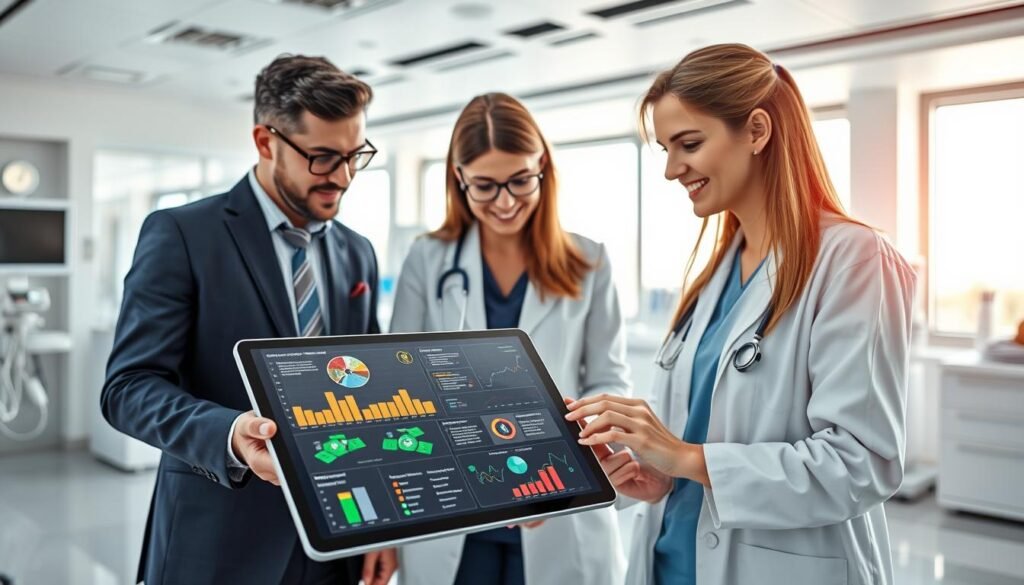
Practical benefits include faster diagnosis, smarter drug selection, and plans that adapt as new data arrive. Patients get treatments that better match their needs, and providers see improved outcomes.
- Optimized dosing: less toxicity, better response.
- Targeted therapies: match drugs to likely responders.
- Adaptive care: plans update with new patient data.
| Item Name | Description | Calories | Price |
|---|---|---|---|
| Personalized Dosage Tool | Adjusts medication levels using patient metrics | 0 | $6,500 |
| Treatment Match Model | Ranks likely effective therapies from trials and records | 0 | $14,000 |
| Outcome Tracker | Monitors response and flags when plans need change | 0 | $4,200 |
The Rise of Telemedicine and Remote Monitoring
Home‑based monitoring tools feed steady streams of data that help teams act before problems grow. Telemedicine now blends live virtual visits with continuous device readings to keep care connected to daily life.
Wearable Sensors and Patient Monitoring
Wearable sensors and devices capture heart rate, glucose, sleep, and movement. That real‑time information helps clinicians spot changes early.
By applying machine learning models to these feeds, systems can flag risk patterns and improve remote diagnosis accuracy. This supports faster, targeted treatment and reduces emergency visits.
The potential is clear: remote monitoring expands access for rural and underserved patients. It also makes chronic disease management more proactive and consistent.
- Continuous data lets teams prioritize urgent cases.
- Devices send alerts that prompt timely follow‑up.
- Remote services lower travel burdens and improve adherence.
| Item Name | Description | Calories | Price |
|---|---|---|---|
| Wearable Heart Monitor | Continuous ECG and arrhythmia alerts to providers | 0 | $199 |
| Glucose Patch | Real‑time glucose readings with trend reports | 0 | $149 |
| Activity & Sleep Tracker | Monitors mobility, sleep quality, and fall risk | 0 | $99 |
| Remote Care Hub | Aggregates device data for clinician dashboards | 0 | $1,200 |
Addressing Ethical Concerns and Data Privacy
As systems manage more patient records, privacy protections must grow with them.
Protecting personal health information is essential for trust. Patients expect clear rules about who sees their records and why.
We must use machine learning responsibly so training data stays secure and fair. That means removing bias, auditing models, and limiting access to sensitive files.
Transparency matters: explain how tools use data, what decisions they influence, and how clinicians review results.
- Secure storage and strict access controls
- Regular bias and fairness checks
- Clear patient consent and opt‑out choices
| Item Name | Description | Calories | Price |
|---|---|---|---|
| Data Encryption Suite | Encrypts records at rest and in transit | 0 | $5,500 |
| Bias Audit Tool | Scans models for demographic bias | 0 | $7,200 |
| Consent Manager | Tracks patient permissions and access logs | 0 | $3,400 |
The future of medicine depends on trust. By protecting data and staying open about use, we can keep care both safe and ethical.
Navigating Regulatory Frameworks and Compliance
Regulation is becoming a central part of how new medical technologies reach patients safely. Clear rules help providers trust tools and protect patients when systems move from research to routine care.
The European Artificial Intelligence Act
The European Artificial Intelligence Act entered into force on August 1, 2024. It sets standards for risk tiers, documentation, and transparency for devices that use artificial intelligence.
For digital health and medical devices, the Act means stricter reporting, audits, and controls over training data and performance. That promotes safer use and better access across markets.
Product Liability and Safety
Product liability rules make manufacturers run rigorous studies and keep clear logs of updates and incidents. This reduces harm and gives clinicians confidence to adopt new tools.
- Mandatory risk assessment and post-market monitoring
- Clear documentation of data sources and model behavior
- Defined channels for patient and provider feedback
| Item Name | Description | Calories | Price |
|---|---|---|---|
| Data Encryption Suite | Encrypts records at rest and in transit | 0 | $5,500 |
| Bias Audit Tool | Scans models for demographic bias | 0 | $7,200 |
| Consent Manager | Tracks patient permissions and access logs | 0 | $3,400 |
Overcoming Barriers to Widespread Adoption
Adoption often stalls not because tech fails, but because people and processes are not ready to change. Organizational shifts, training gaps, and unclear roles slow the move from pilot to daily use.

To show value, teams must reduce costs and trim workflow friction. Clear pilots with measurable goals can prove how new systems improve patient outcomes and save time.
Researchers and clinicians need protected time and simple tools to integrate models into usual tasks. Training that fits real schedules builds trust and boosts long‑term use.
- Engage people early: involve nurses, IT, and providers when planning changes.
- Streamline processes: make systems fit existing workflows, not the other way around.
- Measure impact: track data on outcomes, time savings, and costs.
| Item Name | Description | Calories | Price |
|---|---|---|---|
| Clinical Pilot | Small test to measure workflow and outcome gains | 0 | $5,000 |
| Training Bundle | Short modules for staff and providers | 0 | $2,500 |
| Integration Service | Connects systems to EHR and device feeds | 0 | $7,500 |
Adoption is a team effort. When leaders, clinicians, and IT work together, innovation in diagnostics and treatment becomes accessible across the sector.
The Role of Digital Health Data in Training Models
High-quality digital health records are the fuel that trains better clinical models.
The European Health Data Space
The European Health Data Space (EHDS) entered into force in 2025 to enable secure secondary use of electronic health data across borders.
EHDS provides regulated access to robust datasets that boost model accuracy and speed research for new medical devices and digital health tools.
- Secure, consented access helps researchers build reliable machine learning models.
- Standardized records reduce noise and improve diagnosis and treatment signals.
- Transparent governance promotes fair use and wider adoption by providers and patients.
| Item Name | Description | Calories | Price |
|---|---|---|---|
| EHDS Dataset | Linked, pseudonymized patient records for secondary research use | 0 | $0 (public access rules) |
| Model Training Set | Curated clinical data for model validation and testing | 0 | $12,000 |
| Device Integration Feed | Standardized streams from approved medical devices | 0 | $4,500 |
| Research Access Portal | Secure gateway for providers and researchers to request data | 0 | $3,200 |
Real World Case Studies and Success Stories
Practical success stories demonstrate how modern tools lift outcomes for underserved patients. A recent study used a machine‑learning algorithm to identify objective features of knee pain. That work revealed patterns that disproportionately affect underserved communities.
These findings show how technologies can sharpen diagnosis and guide better treatment plans. Systems that analyze clinical information helped clinicians spot issues earlier and reduce missed diagnoses.
Other real-world pilots pair medical devices with diagnostic models to support remote clinics and community health centers. Patients get clearer care plans and faster follow-up.
- Case studies prove improved health outcomes and reduced time to diagnosis.
- Targeted use of devices and analytics expands access for underserved patients.
- These examples map a path forward for scalable, patient-focused services.
| Item Name | Description | Calories | Price |
|---|---|---|---|
| Knee Pain Study | Algorithm flagged objective features tied to disparities | 0 | $15,000 |
| Remote Diagnostic Kit | Device + model for community clinics | 0 | $1,200 |
| Care Navigation Service | Analytics to prioritize follow-up and referrals | 0 | $4,500 |
Future Trends and Emerging Medical Technologies
Emerging tools promise to make routine monitoring and personalized treatment easier and more accessible.
We will see more learning systems that forecast disease trajectories and suggest tailored care plans. Those systems aim to improve outcomes and reduce wasted time for clinicians.
New devices and services will stream patient data to care teams. That information can trigger timely follow-up and smarter treatment choices.
- Greater integration of predictive models into daily workflows.
- Expanded remote monitoring that keeps patients safer at home.
- Tools that turn raw data into clear signals for treatment decisions.
| Item Name | Description | Calories | Price |
|---|---|---|---|
| Progression Predictor | Forecasts short-term disease course for care planning | 0 | $11,000 |
| Home Monitoring Kit | Wearable devices plus cloud service for remote follow-up | 0 | $299 |
| Treatment Advisor | Summarizes patient information to support therapy choices | 0 | $8,500 |
| Integration Hub | Links device feeds to clinician dashboards and services | 0 | $4,200 |
Conclusion
As learning systems become part of routine work, care grows more precise and timely.
These systems help clinicians turn complex information into clear steps for treatment. They reduce guesswork and free teams to focus on patients.
Thoughtful use keeps progress ethical and builds trust. Clear rules, strong data controls, and ongoing review will keep systems safe and fair.
When teams combine smart tools with careful practice, care improves across settings. That steady progress means better treatment, safer decisions, and brighter outcomes for patients.
FAQ
What is the difference between machine learning and traditional software in clinical tools?
Machine learning uses data-driven models that learn patterns from health records, images, or device outputs, while traditional software follows fixed rules coded by developers. ML adapts as it sees more data, improving tasks like image interpretation or risk prediction over time.
How do models improve diagnostic accuracy for conditions like cancer or heart disease?
Models analyze large datasets—imaging, lab results, and clinical notes—to spot subtle signals humans might miss. When trained and validated properly, they can flag abnormalities earlier and reduce false negatives, helping clinicians confirm diagnoses faster.
Are patient privacy and data protection compromised when using these tools?
Not necessarily. Strong de-identification, encryption, and access controls keep patient data secure. Compliance with HIPAA in the U.S. and GDPR in Europe, plus proper governance, are essential steps to protect privacy while enabling model training.
Can predictive analytics actually reduce hospital readmissions?
Yes. Predictive tools identify patients at higher risk of readmission by combining clinical history, social factors, and device data. With early interventions—care coordination, follow-up calls, or home monitoring—readmission rates can drop.
How do regulators view software that supports clinical decisions?
Regulators classify and assess such software based on its intended use and risk. The FDA, CE marking, and the European AI Act frameworks require evidence of safety, performance, and transparency, especially for tools that directly influence care.
Will clinicians lose control over treatment choices if these systems are used?
No. These systems are designed to assist, not replace, clinicians. They provide insights and probability scores; the final clinical judgment remains with the healthcare professional who integrates the tool’s output with patient context.
What barriers slow widespread adoption across hospitals and clinics?
Key barriers include data silos, interoperability gaps, unclear reimbursement models, clinician workflow disruption, and the upfront cost of implementation. Addressing these requires standards, training, and demonstrable ROI.
How do wearables and remote monitoring feed into predictive care models?
Wearables collect continuous physiologic data—heart rate, activity, oxygen levels—that models use to detect deterioration or trends. This enables earlier interventions, remote triage, and personalized follow-up plans based on real-world signals.
What steps can health systems take to ensure trustworthy model deployment?
Start with representative training data, perform rigorous validation, monitor ongoing performance, involve clinicians in design, document limitations, and implement governance for updates and incident response to maintain safety and fairness.