Embracing AI: Exploring the Incredible Benefits of Artificial Intelligence
Since the public release of OpenAI’s ChatGPT in late 2022, the tech landscape has shifted fast. You now see tools that learn from patterns and make daily tasks smoother. This guide highlights the benefits and shows how to use them with confidence.
By analyzing large amounts of data, these systems offer new levels of help. They power practical solutions in work, health, and home. We will break down how this intelligence works in simple terms.
Our goal is to demystify the topic and give you a clear roadmap. You’ll learn where these tools fit, how they use data to improve, and what smart choices look like in a fast-moving digital world.
Understanding the Core of Artificial Intelligence
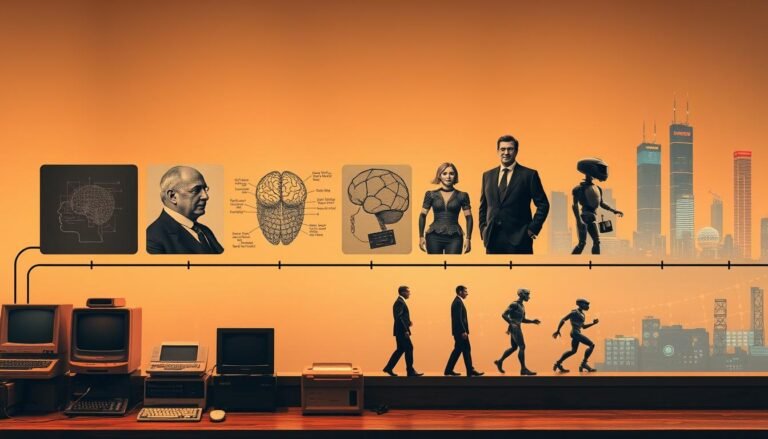
The roots of modern machine learning trace back to early computing pioneers who asked if machines could mimic human thought. Alan Turing’s work in the 1950s set the stage for experiments that turned that question into real systems.
Defining Machine Learning
Machine learning is the branch that teaches computers to learn from examples. Instead of hard coding every rule, developers feed models many cases and let algorithms find useful patterns.
- Models improve over time as they see more data.
- They free teams from repetitive tasks and save valuable time.
- Companies use these tools to generate insights and speed up work.
The Role of Data
Good data fuels better results. Clean, varied data lets models spot real patterns and produce reliable content and predictions.
| Item Name | Description | Calories | Price |
|---|---|---|---|
| Training Set | Large labeled samples used to teach models | — | $0 |
| Validation Set | Held-out data to tune algorithms | — | $0 |
| Test Set | Unseen data to check real performance | — | $0 |
Key Benefits of Artificial Intelligence Across Industries
Companies now use learning systems to turn raw data into faster decisions and better service.
More than 45% of organizations already use AI agents to drive innovation and improve operational efficiency, according to Forrester. This shift shows how automation is moving from a nice-to-have to a must-have for competitive businesses.
- Across industries, these systems streamline customer service and speed internal operations.
- Integrating these tools helps teams raise productivity while keeping customer interactions personal.
- In healthcare, diagnostics run faster and with greater accuracy, improving patient care and outcomes.
| Item Name | Description | Calories | Price |
|---|---|---|---|
| AI Agent | Automates routine tasks and suggests process improvements | — | $0 |
| Analytics Engine | Converts large data sets into actionable insights | — | $0 |
| Clinical Decision Tool | Improves diagnostic speed and accuracy in healthcare settings | — | $0 |
| Customer Chat System | Delivers personalized responses and reduces wait times | — | $0 |
Revolutionizing Healthcare Diagnostics and Treatment
Hospitals now pair smart systems with clinician expertise to catch problems earlier and speed care. These advances cut down on human error and give staff time back for patients.
Personalized Patient Care
Machine learning analyzes large pools of data to spot patterns in scans, lab work, and records. That lets doctors tailor treatment plans to each patient’s needs.
By automating routine data entry and research tasks, teams save valuable time and reduce error. Nurses and physicians can focus on direct patient service and critical decisions.
- Algorithms flag anomalies in images with high accuracy, supporting faster diagnosis.
- Clinical systems standardize workflows to lower administrative load.
- Humans and machines work together to improve safety and outcomes.
| Item Name | Description | Calories | Price |
|---|---|---|---|
| Imaging Analyzer | Uses algorithms to detect patterns in MRIs and X-rays | — | $0 |
| Clinical Workflow Tool | Automates data entry and scheduling to save clinician time | — | $0 |
| Personalized Care Engine | Processes patient history to suggest tailored treatment options | — | $0 |
| Decision Support | Offers evidence-based recommendations to reduce human error | — | $0 |
Driving Economic Growth and Productivity
Modern tech tools are reshaping how economies grow by turning data into measurable value. One study projects that artificial intelligence could add about $15.7 trillion to the global economy by 2030. That number signals real change for business leaders and workers.
When companies use automation to handle repetitive tasks, employees gain time for higher-value work. Teams can focus on problem solving, strategy, and customer care. This shift lifts overall productivity and improves operations.
- Deeper insights help businesses spot market trends and make faster, smarter decisions.
- Managing content and data more efficiently frees resources and cuts waste.
- New roles are emerging across industries as firms invest in innovation and longer-term growth.
| Item Name | Description | Calories | Price |
|---|---|---|---|
| Automation Suite | Streams repetitive tasks and reduces manual work | — | $0 |
| Data Insights Engine | Analyzes trends to guide business decisions | — | $0 |
| Content Manager | Optimizes content workflow and resource allocation | — | $0 |
| Customer Analytics | Improves service by surfacing behavioral signals | — | $0 |
Enhancing Customer Service and Engagement
Today, modern chat systems help companies deliver quick, clear replies and keep customers engaged. These tools let service teams scale while keeping replies friendly and relevant.
Natural Language Processing
Natural language processing powers chatbots and voice agents so they understand intent and answer in plain speech. That means customers get instant help for routine tasks without waiting on hold.
- Instant responses reduce wait time and lift productivity for support teams.
- Smart routing hands complex cases to humans, preserving quality.
- Patterns in customer data help tune replies and improve accuracy.
Personalized Recommendations
Organizations use recommendation engines to surface relevant products and content. This personalization makes each customer feel known, boosting satisfaction and loyalty.
Automating routine suggestions frees your team to handle higher-value work and strategic operations.
| Item Name | Description | Calories | Price |
|---|---|---|---|
| Chatbot Engine | Handles FAQs and simple transactions 24/7 | — | $0 |
| Recommendation Model | Suggests products based on past behavior | — | $0 |
| Fraud Detection Tool | Analyzes behavior patterns to flag risk | — | $0 |
| Support Automation | Routes tickets and automates routine tasks | — | $0 |
Results: these systems improve operational efficiency, strengthen security, and help businesses engage customers more deeply. That combination supports long-term loyalty and sparks ongoing innovation.
Mitigating Climate Change Through Data
Data-driven climate tools now let researchers spot rising risks before they become crises. Scientists use machine learning to analyze environmental data in real time and find patterns hidden in billions of readings.
These algorithms improve weather models and help organizations predict floods, heat waves, and droughts faster. That lowers risks and supports smarter planning for emergency teams and infrastructure managers.
Systems also process large content sets about carbon emissions. This lets governments and businesses measure impact and set clear targets for cutting pollution.
- Real-time monitoring flags anomalies for quick response.
- Predictive models guide resource allocation and resilience work.
- Actionable insights help customer-facing programs encourage greener choices.
| Item Name | Description | Calories | Price |
|---|---|---|---|
| Sensor Network | Collects air, soil, and water readings across regions | — | $0 |
| Forecast Engine | Runs algorithms to predict extreme events | — | $0 |
| Emission Monitor | Analyzes content on carbon sources and trends | — | $0 |
| Decision Dashboard | Delivers insights for policy and private sector planning | — | $0 |

Every piece of data improves our view of impact and risk. With clear signals, we can protect ecosystems and manage resources more sustainably for future generations.
Strengthening Cybersecurity and Threat Detection
Networks face smarter attacks, so teams use advanced monitoring to catch subtle intrusions in real time.
Cybersecurity experts apply artificial intelligence to scan traffic and flag odd patterns in data. This step speeds detection and trims the window attackers have to act.
Automated response reduces human error and lowers risks to customer data and business operations. Systems that act fast limit breach impact and protect productivity.
- Automation routes alerts and isolates suspicious hosts before spread.
- Fraud detection models spot patterns humans might miss.
- Organizations gain better accuracy in defending against malware and ransomware.
| Item Name | Description | Calories | Price |
|---|---|---|---|
| Real-time Monitor | Watches network events and raises instant alerts | — | $0 |
| Response Automation | Isolates threats and runs remediation playbooks | — | $0 |
| Fraud Detection Engine | Analyzes transactions to flag suspicious activity | — | $0 |
| Threat Intel Feed | Supplies current signatures and risk indicators | — | $0 |
Empowering the Modern Workforce
The shift toward data-driven tools is redefining job skills and career pathways across industries. Training and targeted learning help teams move from routine roles to strategic work.
Upskilling for the Future
The University of Cincinnati Carl H. Lindner College of Business offers an AI in Business Graduate Certificate to give professionals practical skills. This program teaches how to use systems, manage data, and apply intelligence in real projects.
By automating repetitive tasks like data entry, employees gain time to focus on creative problem solving and strategic development. Businesses are investing in training and support so staff can adopt new tools with confidence.
- Workforce training: helps staff handle complex content and customer needs.
- Automation: reduces low-value work and raises productivity.
- Career growth: upskilling strengthens individual development and business resilience.
| Item Name | Description | Calories | Price |
|---|---|---|---|
| UC AI Certificate | Graduate program teaching practical AI skills for business | — | $0 |
| Productivity Tools | Systems that automate repetitive tasks and streamline workflows | — | $0 |
| Learning Support | Company-sponsored training and mentoring for staff development | — | $0 |

Investing in education is the best way to keep your team competitive and ready for future growth. With the right training, organizations can turn new tools into real advantages for both employees and the business.
Emerging Trends Shaping the Future of AI
The latest wave of models blends visual and verbal signals so systems can understand richer context.
| Item Name | Description | Calories | Price |
|---|---|---|---|
| GPT-4o | Multimodal model processing text, images, and video | — | $0 |
| Virtual Assistant Suite | Handles scheduling, summaries, and complex workflows | — | $0 |
| Ethics Monitor | Tracks fairness, transparency, and compliance signals | — | $0 |
Multimodal AI Models
Multimodal models like OpenAI’s GPT-4o can read images, hear audio, and parse text together.
That lets businesses pull deeper insights from mixed content and spot patterns fast. Teams can combine visual reports with written notes to speed analysis and detection tasks.
Stronger Virtual Assistants
Virtual assistants now manage richer workflows, from drafting proposals to handling customer scheduling.
They act as dependable tools that free people for strategic work. You get better productivity and clearer handoffs between humans and systems.
Ethical AI Regulations
Regulation is rising to keep algorithms fair, safe, and transparent.
Organizations must show how data is used and how decisions are made. Clear rules will help industries adopt new applications with public trust.
- Multimodal models expand use cases across industries.
- Stronger assistants become daily tools for business teams.
- Ethical rules guide safe development and real-world deployment.
Conclusion
Practical systems now help teams move faster while keeping customer needs front and center.
By automating routine tasks, organizations cut error and save precious time. That boosts productivity and sharpens operational efficiency, so your business can focus on innovation and better service.
Across industries, these tools make everyday work easier and support smarter decisions. Embrace the change today and position your teams to gain long-term value as systems evolve.
FAQ
What practical gains can businesses expect when they adopt AI systems?
Companies see faster decision-making, fewer human errors, automated repetitive tasks, and improved efficiency across operations. These systems free teams to focus on higher-value work like strategy and innovation while handling data entry, routine support, and pattern detection in real time.
How does machine learning differ from other AI approaches?
Machine learning uses algorithms that learn from data to make predictions or find patterns. Unlike rule-based systems, it improves over time as it ingests more examples, enabling better fraud detection, personalized recommendations, and accurate forecasting across industries.
Can AI improve customer service without replacing human agents?
Yes. Natural language tools handle routine queries and route complex issues to people, reducing wait times and improving satisfaction. AI augments support teams with suggested responses, sentiment analysis, and customer insights so humans can focus on empathetic, high-impact interactions.
What safeguards should organizations use to reduce risks like bias and errors?
Adopt transparent models, routine audits, diverse training data, and human oversight. Combine automated monitoring with clear governance, explainability tools, and industry best practices to catch drift, reduce bias, and ensure reliable, accountable outcomes.
How is AI transforming healthcare diagnostics and patient care?
AI helps detect disease earlier, tailors treatment plans, and speeds image analysis. Clinicians get decision support from predictive models and personalized care recommendations, improving accuracy and allowing teams to spend more time on patient interaction.
What skills should workers develop to stay relevant as AI tools become common?
Focus on problem-solving, critical thinking, digital literacy, and domain expertise that complements automation. Learning how to use AI tools, interpret model outputs, and apply ethical judgment will make you valuable across roles and industries.
Are there environmental benefits from using AI for climate challenges?
Yes. AI optimizes energy use, improves supply-chain efficiency, and helps model climate scenarios. These applications support more effective resource management and targeted emissions reductions when combined with policy and industry action.
How does AI strengthen cybersecurity and threat detection?
Machine learning detects anomalies, uncovers attack patterns, and speeds incident response. Automated systems process vast logs quickly to flag suspicious behavior, helping security teams prioritize threats and reduce breach impact.
What emerging trends should organizations watch in AI development?
Keep an eye on multimodal models that combine text, images, and sound; more capable virtual assistants; and evolving ethical and regulatory frameworks. These trends will shape product design, compliance, and how teams integrate AI into workflows.